
PERTUSSIS -WHOOPING COUGH
Mode of transmission:
Droplet & contact
PPE:
1. Gown
2. Face shield
3. Gloves
Duration of Precautions:
Continue precautions for five days after start of treatment or three weeks if not treated.
Infectious Material:
Respiratory secretions
Signs & Symptoms:
Severe coughing
Whooping which may lead to vomiting
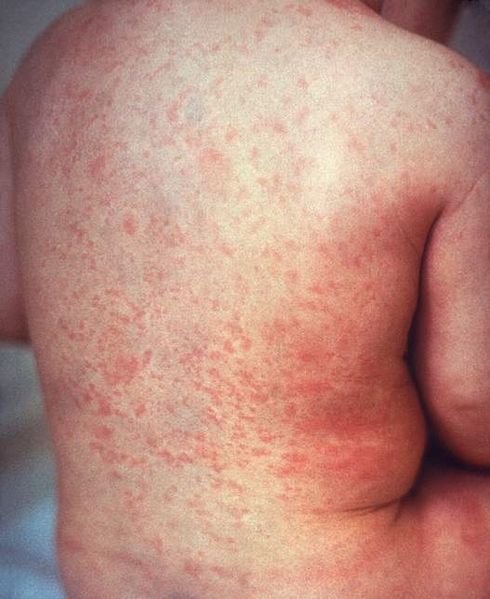
RUBELLA- ACQUIRED
IMPORTANT:
Only staff immune to rubella should enter room. However, staff who are pregnant should not be assigned to give care for patients regardless of whether they are immune or not to rubella.
Mode of transmission:
Droplet & contact
PPE:
1. Gown
2. Face shield
3. Gloves
Duration of Precautions:
Continue precautions for seven days after onset of rash
Infectious Material:
Respiratory secretions
Signs & Symptoms:
Fever with diffuse punctuate
Maculopapular rash
RUBELLA- CONGENITAL
IMPORTANT:
Only staff immune to rubella should enter room. However, staff who are pregnant should not be assigned to give care for patients regardless of whether they are immune or not to rubella.
Mode of transmission:
Droplet & contact
PPE:
1. Gown
2. Face shield
3. Gloves
Duration of Precautions:
Continue precautions for one year after birth, unless urine
and nasopharyngeal cultures done after three months
of age are negative.
Infectious Material:
Respiratory secretions
Urine
Signs & Symptoms:
Low birth weight, small head size, heart abnormalities
Visual problems, bulging fontanelle, congenital rubella syndrome
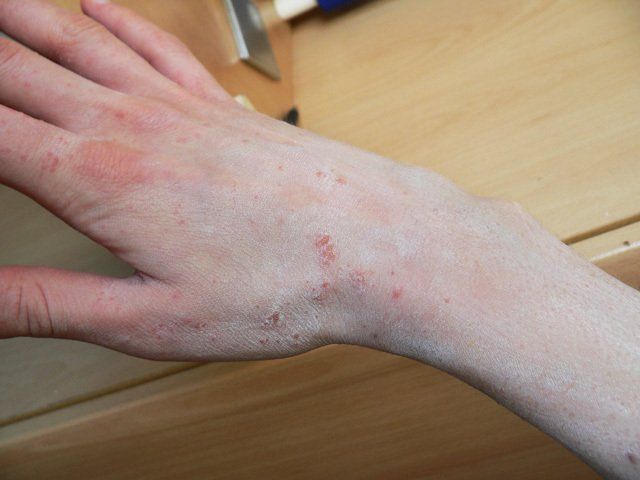
SCABIES
Mode of transmission:
Contact
PPE:
1. Gown
2. Gloves
Duration of Precautions:
Continue precautions until 24 hours
after application of scabicide.
Infectious Material:
Sarcoptes scabiei mites
Signs & Symptoms:
Itching (mainly at night), rash
Sores, thick crusts on skin
FYI:
Mites don't survive away from the body for more than 3 days. Clothing should be washed and dried on hot setting or bagged up for at least 5 days. Shoes can be bagged and placed in a freezer.
An infested person can spread scabies even if they don't have a rash.
The burrows of scabies usually occur in the finger webs, feet, wrists, back, buttocks, and external genitals.
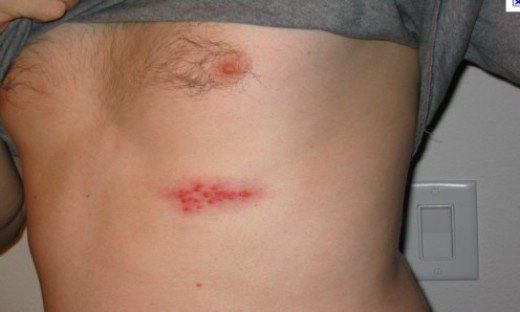
SHINGLES- HERPES ZOSTER (localized)
Only staff immune to varicella should enter room.
Mode of transmission:
Contact
PPE:
1. Gown
2. Gloves
Duration of Precautions:
Continue precautions until all lesions
have crusted and dried.
Infectious Material:
Respiratory secretions
Drainage from cutaneous lesions
Vesicle fluid
Signs & Symptoms:
Vesicular rash
Sometimes fever
Nerve pain
FYI:
Airborne precautions should be considered
for clients that are immunocompromised.
SHINGLES- HERPES ZOSTER (disseminated)
IMPORTANT:
Only staff immune to varicella should enter room.
Mode of transmission:
Airborne
PPE:
Routine Practices recommended
Duration of Precautions:
Continue precautions until all lesions
have crusted and dried.
Infectious Material:
Respiratory secretions
Drainage from cutaneous lesions
Vesicle fluid
Signs & Symptoms:
Vesicular rash
Sometimes fever
Nerve pain
FYI:
Disseminated zoster is usually a chicken pox rash.
Dd
STREPTOCOCCUS GROUP A (STREPTOCOCCUS PYOGENES)
Mode of transmission:
Droplet & contact
PPE:
1. Gown
2. Face shield
3. Gloves
Duration of Precautions:
Continue precautions until 24 hours of effective treatment.
Infectious Material:
Respiratory secretions
Wound drainage
Skin exudates
Signs & Symptoms:
Fever, rash, severe pain,
Severe swelling, skin exudates
FYI:
Use good personal hygiene, especially frequent and thorough hand washing

.jpg)

